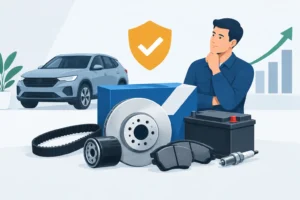
A replacement part that looks right on the bench can still create a costly return once it reaches the vehicle. Incorrect mounting points, connector differences, poor material quality and inconsistent tolerances all turn a routine repair into lost workshop time. That is why OEM parts remain a serious consideration for dealers, repairers, fleet operators and owners who place reliability ahead of a low upfront price.
The right choice is not always the most expensive one, nor is it always the part supplied in a vehicle manufacturer-branded box. What matters is understanding what the part is, verifying fitment properly and selecting a supplier that can support the repair with consistent quality and dependable availability.
What OEM Parts Actually Mean
OEM stands for Original Equipment Manufacturer. In the strictest sense, an OEM part is made by the manufacturer that produced the component fitted to the vehicle when it was new. It may be supplied in the vehicle maker’s packaging, or it may be sold under the component manufacturer’s own brand.
This distinction matters because the term is often used loosely in the aftermarket. A seller may describe a component as OEM quality, OE equivalent or OEM replacement. These descriptions do not necessarily mean it came from the original production supplier or was built to identical specifications.
For purchasing decisions, it is helpful to separate parts into three practical categories. Genuine parts are supplied under the vehicle manufacturer’s brand and are generally the clearest choice where exact original specification is required. OE supplier parts are made by a recognised original equipment producer and may offer the same design heritage without vehicle-branded packaging. Aftermarket parts are produced independently for replacement use, with quality ranging from highly dependable to unsuitable for demanding repairs.
None of these categories is automatically right for every vehicle. The key is matching the component’s quality, application and warranty expectations to the job.
When OEM Parts Make Commercial Sense
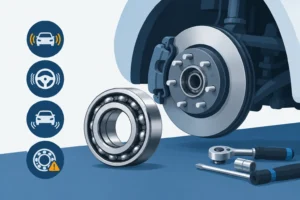
OEM parts are most valuable where a component affects safety, engine timing, precise electronic operation or the long-term integrity of the repair. A timing belt kit, fuel pump, sensor, clutch assembly or cooling component can cause significant disruption if it fails prematurely or does not fit correctly.
For a workshop, the calculation extends beyond the cost of the item. A return visit means additional labour, bay occupancy, customer inconvenience and pressure on reputation. For fleets, a failed part can mean vehicle downtime, missed deliveries and unplanned maintenance expenditure. In these situations, the greater initial cost of a proven component can be the lower-cost decision overall.
They are also a strong choice for newer vehicles, specialist applications and repairs involving complex systems. Modern lighting, electronic modules, advanced fuel systems and engine-management components often rely on exact calibration and connection standards. A component that is physically similar but electronically incompatible can trigger warning lights, poor performance or a no-start condition.
That said, OEM is not always essential. For routine service items such as air filters, oil filters, wiper systems and selected braking or suspension components, a reputable aftermarket alternative can offer excellent service life when it meets the required specification. The decision should be based on product provenance, vehicle use, warranty needs and the consequences of failure – not packaging alone.
The Fitment Check That Prevents Costly Errors
Correct fitment is the foundation of every successful parts sale. Vehicle make, model and year provide a starting point, but they are rarely enough on their own. Manufacturers can change engine codes, wiring layouts, production dates and trim specifications within the same model year.
Whenever possible, identify the vehicle using its VIN, engine code, registration details and the original part number. For body and lighting parts, confirm the side of the vehicle, lamp type, bumper or grille variation and any relevant trim level. For mechanical parts, check dimensions, connector type, pulley configuration and mounting arrangement before ordering.
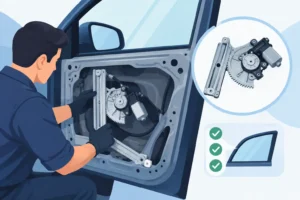
This process is especially important for parts such as radiators, side mirrors, grilles, fuel pumps and headlights. Two units may appear identical in an image but differ in hose position, electrical connection, sensor provision or fixing points. A few minutes spent checking can prevent delayed repairs and unnecessary stock returns.
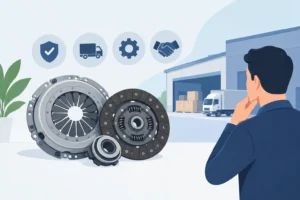
For trade customers, a supplier with broad category coverage provides a practical advantage. Engine, body and service components can be sourced through one established channel, reducing the time spent comparing unknown alternatives across multiple sellers. This is not simply convenient – it helps workshops maintain more predictable repair schedules and purchasing controls.
Quality Is More Than the Part Itself
A dependable replacement component is supported by more than its material specification. It also requires controlled sourcing, clear application data, suitable storage and a supplier able to answer questions when an application is uncertain.
Rubber components, seals, belts and hoses can deteriorate when poorly stored. Electrical parts need protected packaging to avoid damaged terminals or moisture exposure. Cooling components must be handled carefully to prevent bent fins, cracked fittings or hidden transit damage. These details affect performance long before the vehicle leaves the workshop.
Quality control should therefore include inspection at goods-in as well as installation. Check packaging, part numbers, visible condition and included accessories. Compare the new item with the removed component where appropriate, particularly for sensors, pumps, mirrors and lighting assemblies. If something does not match, stop before fitting it. Installation can make a straightforward exchange more difficult and may introduce avoidable labour costs.
Avoiding the Risks of Poorly Described Parts
The strongest warning sign is a vague description combined with an unusually low price. Terms such as “OEM style” or “OEM type” can describe appearance rather than engineering quality. They may be suitable for a limited range of cosmetic applications, but they do not provide assurance for critical systems.
Be cautious where a supplier cannot provide a clear part number, application information or a credible explanation of the product’s origin. This is particularly relevant for safety-related and high-labour repairs. A cheap clutch kit that requires gearbox removal again, or a low-grade timing component that compromises an engine, is not a saving.
Counterfeit products are another concern. Packaging and branding can be copied convincingly, while the internal material, tolerances and testing may fall well below acceptable standards. Purchasing through established distributors reduces this risk by giving buyers a clearer supply route, more consistent product handling and access to support when a question arises.
Building a Better Parts Strategy for Workshops and Fleets
The most effective buyers do not treat every repair as identical. They create a parts strategy around vehicle age, operating conditions, repair complexity and customer expectations. A high-mileage fleet vehicle may need a durable, value-led service solution. A late-model vehicle with advanced electronics may justify OE-level components to protect performance and diagnostics.
For frequently used items, keeping a controlled stock of fast-moving filters, wipers, lighting products and service parts can reduce delays. For slower-moving engine and body components, responsive distribution and accurate catalogue support are often more valuable than holding excessive inventory.
It is also sensible to record repeat fitment issues, warranty claims and product performance by category. Over time, this information shows which products deliver the best balance of price, installation confidence and service life. It gives purchasing teams evidence for supplier decisions rather than relying on assumptions or a single low-cost quotation.
With more than 30 years of aftermarket experience, Multi Top supports this approach through a broad range of engine, body and service parts designed to help trade customers source dependable replacement solutions with confidence. The objective is straightforward: reduce sourcing complexity while maintaining the quality standards that customers expect.
The best part choice is the one that fits correctly, performs consistently and protects the value of the repair. Start with accurate vehicle identification, choose the specification that suits the application, and work with a supplier prepared to stand behind the components they provide.