A faulty power window gear rarely fails without warning. The window may rise slowly, make a repeated clicking or grinding sound, stop part-way, or drop back into the door after reaching the top. For workshops, parts dealers and vehicle owners, recognising the difference between a worn gear, a failing motor and a damaged regulator prevents unnecessary replacement work and helps restore safe, dependable operation.
The window mechanism is a small system with a demanding job. It must lift a heavy glass panel smoothly through guide channels, hold it securely in position and continue working through heat, rain, dust and frequent use. A quality replacement decision therefore depends on more than finding a part that looks similar. Correct fitment, gear profile, regulator design and motor compatibility all matter.
What a power window gear does
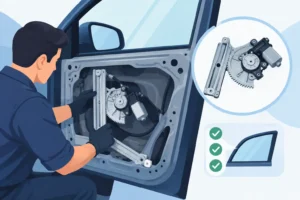
A power window assembly uses an electric motor to turn a reduction gear. That gear slows the motor’s high-speed rotation and converts it into the controlled force needed to move the glass. Depending on the vehicle, the gear may operate a cable-and-drum regulator, a scissor-type regulator or another linked lifting mechanism.
The reduction gear is often housed inside the motor assembly rather than supplied as a separate service item. On some designs, however, workshops can replace a worn gear or gear repair component without changing the full regulator. Whether this is practical depends on the vehicle design, the availability of suitable components and the condition of the surrounding mechanism.
A gear can be made from durable engineered plastic, metal or a combination of materials. Plastic gears are common because they help reduce noise and can protect the motor and regulator from more severe damage under excessive load. That does not make them inferior by default. The critical factors are material quality, tooth accuracy, lubrication and the correct load rating for the application.
Symptoms that point to gear or regulator trouble
The sound of the fault often provides the first useful clue. A motor that can be heard running while the glass does not move usually suggests a stripped gear, broken cable, detached guide or damaged regulator connection. A repetitive clicking may indicate worn gear teeth slipping under load. Grinding can point to internal motor gear damage, contamination or a regulator that is binding badly enough to overload the drive.
Slow movement does not automatically mean the power window gear is at fault. Dry or damaged glass run channels create resistance, while weak electrical supply, corroded switch contacts or a tired motor can reduce lifting force. If the window moves normally in one direction but struggles in the other, technicians should inspect both the regulator path and the motor’s internal condition before ordering parts.
A window that tilts, jams or travels unevenly is more commonly associated with the regulator, guide clips or glass alignment than with the gear alone. Continuing to operate it can strip a marginal gear or snap a cable. In practical terms, early diagnosis often turns a complete window failure into a manageable repair.
Quick checks before removing the door trim
Begin with the basics. Confirm that the relevant fuse, switch and wiring are operating correctly, and compare the affected window with the others. Listen for motor activity and observe whether the glass attempts to move. Check the glass channels for hardened debris, damaged weather strips or signs that the glass has moved out of its guides.
Where safe to do so, measure voltage at the motor connector while the switch is operated. A significant voltage drop under load can imitate a mechanical failure. If supply and earth are sound but the motor runs without moving the glass, the fault is likely within the motor gearcase, regulator or their connection.
Door trim removal should be carried out carefully. Modern doors may contain side-impact components, wiring looms, vapour barriers and, on certain vehicles, side airbags. The glass should be supported before disconnecting a regulator. Releasing a damaged mechanism without securing the glass can cause injury or damage the window and door frame.
Gear-only repair or complete regulator replacement?
This is where cost control must be balanced with repair confidence. A gear-only repair can be worthwhile when the motor is strong, the regulator arms or cable are intact, the drum is undamaged and the replacement gear is engineered for the exact motor application. It can reduce parts cost and avoid replacing serviceable components.
However, fitting a new gear into a regulator that has stretched cables, worn pulleys, distorted arms or dry guide tracks is a short-term solution at best. The renewed gear may be exposed to the same excessive load that caused the original fault. For a workshop managing warranty risk, a complete regulator or motor-and-regulator assembly is often the more dependable choice when several components show wear.
The decision also depends on labour. On some vehicles, accessing and rebuilding the motor gearcase takes enough time that a complete quality assembly offers better value. On others, the motor can be transferred easily and a correctly matched regulator is the efficient repair. Dealers and trade buyers should consider the total installed cost, not simply the unit price.
Selecting the correct replacement component
Window systems are highly vehicle-specific. Parts that appear similar can differ in mounting points, cable routing, gear tooth count, electrical connector, anti-pinch calibration requirements and left- or right-hand door configuration. Accurate vehicle details remain essential: make, model, year, body style, door position and, where available, original equipment reference number.
For the best result, inspect the removed unit against the replacement before fitting. Confirm the regulator mounting locations, motor bolt pattern, connector shape and glass carrier arrangement. If a separate gear is being installed, compare diameter, thickness, tooth profile, centre bore and the position of any stops or splines. Small variations can cause noise, poor engagement or immediate failure.
Quality should be assessed beyond appearance. A reliable replacement component needs consistent moulding or machining, accurate fitment and materials capable of handling repeated load cycles. For trade customers, dependable packaging, clear application information and predictable availability are equally important. Delays caused by an incorrect or low-grade component can keep a bay occupied and erode customer trust.
Multi Top supports replacement-part sourcing with a broad aftermarket range and the practical guidance needed to identify suitable components. For workshops and dealers, that combination helps reduce sourcing complexity while maintaining a standard of durability and performance their customers expect.
Fitting practices that protect the new gear
Replacing the failed item alone is not enough. Before reassembly, clean the glass channels and inspect the run rubbers for tears, swelling or hardening. Use only an appropriate lubricant where specified by the vehicle manufacturer. Excess grease can collect dust and increase drag, while unsuitable products may affect rubber components or contaminate the mechanism.
Check that the glass sits squarely in its carriers and that all fasteners are tightened correctly. Operate the window through several full cycles before refitting the trim panel. It should travel at a consistent speed, sit fully against the upper seal and stop without abnormal clicking or strain. Many vehicles also require window initialisation after battery disconnection or regulator work so that one-touch and anti-pinch functions operate correctly.
If the window slows near the top after a new gear or regulator has been fitted, do not assume the replacement part is defective. Recheck glass alignment and channel resistance first. Correcting a binding guide can prevent a repeat failure and delivers a better-quality repair.
Stocking decisions for dealers and repair businesses
Power-window repairs can be urgent. A window stuck open exposes a vehicle to weather and security concerns, while a window stuck closed creates a daily inconvenience for the driver. Stock planning should therefore focus on common applications within the local vehicle parc, popular front-door positions and assemblies with a known history of regulator or cable wear.
For businesses that carry repair components, clear application control is vital. Keep left- and right-hand variants separate, label motor-included and motor-excluded regulators clearly, and confirm whether an item is suitable for saloon, hatchback or estate body styles. A simple fitment check at the counter saves time for the technician and avoids costly returns.
A power window mechanism may be out of sight, but its reliability is immediately noticed by every driver. Diagnosing the full system, choosing parts that match the application and correcting the source of excess resistance will deliver a repair that operates quietly, securely and for the long term.