A brake-pad replacement can look routine on a job card, yet the friction material selected affects noise complaints, wheel cleanliness, wear rates and the customer’s confidence in the repair. In the choice of ceramic versus organic brake pads, neither material is automatically better. The correct option depends on the vehicle, driving conditions, brake-system design and the result the owner or fleet operator expects.
For workshops and parts dealers, that distinction matters. Supplying a pad that fits physically is not enough; it must also provide stable, dependable performance in service. Understanding the practical differences helps reduce returns, prevent avoidable noise issues and support a better long-term repair.
Ceramic versus organic brake pads: the core difference
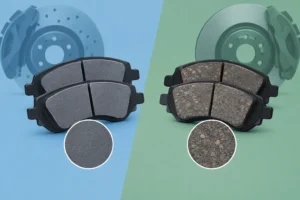
Organic brake pads, often described as non-asbestos organic or NAO pads, are made from a blend of fibres, resins and friction modifiers. Depending on the formulation, they may contain materials such as rubber, glass, aramid fibres and small metallic elements. They are designed to provide smooth, quiet braking for normal road use.
Ceramic brake pads use a denser friction compound containing ceramic fibres, bonding agents and, in many cases, fine copper or other metallic fibres. The material is engineered to manage heat effectively while maintaining a consistent pedal feel over a broad range of everyday operating temperatures.
Both pad types convert the vehicle’s kinetic energy into heat through friction against the brake disc. The difference lies in how they create friction, shed heat and wear over time. Those characteristics influence the real-world service experience far more than the label alone.
Organic pads: a practical choice for routine driving
Organic pads are commonly suited to smaller passenger vehicles, light city use and drivers who value a gentle initial bite. Their softer composition can make them quiet when matched correctly to the disc and caliper, particularly at low speeds and during regular stop-start driving.
They also tend to be the more economical option at the point of purchase. For price-sensitive repairs on older vehicles or cars covering modest annual mileage, an appropriate organic pad can offer dependable braking performance without adding unnecessary cost to the job.
The trade-off is wear. Because organic materials are generally softer, they can wear more quickly than ceramic compounds, especially on heavier vehicles or those used in frequent urban traffic. They may also generate darker brake dust, which is more visible on alloy wheels. Under repeated hard braking, their friction characteristics can change more noticeably as temperatures rise.
That does not make organic pads a poor-quality choice. A quality organic pad, correctly specified and installed, remains a sound replacement for many applications. It is best viewed as a solution for standard driving conditions rather than sustained high-load use.
Where organic pads make sense
Organic pads are often a sensible recommendation for a vehicle used for local journeys, school runs, errands and moderate commuting. They can also suit customers whose priority is an affordable, quiet replacement and whose vehicle is fitted with a braking system designed around an NAO-style compound.
For trade buyers, the key is to avoid treating low purchase cost as the only measure of value. If the vehicle is a heavy SUV, a people carrier, a delivery vehicle or regularly travels through congested routes, shorter pad life may increase the total cost of ownership.
Ceramic pads: cleaner operation and consistent feel
Ceramic brake pads are often selected for their controlled braking response, lower visible dust output and potential for longer service life. Their dust is usually finer and lighter in colour than the residue produced by many organic pads, helping wheels remain cleaner between washes.
They are also well regarded for quiet operation when the pad formulation, shims, hardware and disc condition are all correct. Ceramic materials handle normal road heat cycles effectively, which can support a more consistent pedal feel for drivers who cover higher mileage or encounter frequent stop-start traffic.
For a workshop, ceramic pads can be an attractive premium recommendation where the application allows it. Customers with newer passenger cars, executive vehicles or well-maintained daily drivers often notice the benefits in cleaner wheels and refined braking behaviour. Fleets may also value longer intervals between pad replacements where operating conditions are suitable.
However, ceramic does not mean suitable for every demanding application. Some performance, commercial and heavy-load vehicles require pads formulated for high thermal capacity, which may include semi-metallic or specialist friction materials rather than a conventional ceramic compound. Always follow the vehicle manufacturer’s specification and assess the duty cycle.
The cost and performance balance
Ceramic pads typically cost more than organic alternatives. The higher upfront price can be justified if the customer values reduced wheel dust, quiet operation and potentially longer pad life. It may not be the best commercial choice for an older vehicle where the driver is simply seeking an economical, safe replacement for low-mileage use.
The right conversation is not “which pad is best?” but “which pad delivers the best value for this vehicle and its use?” That approach protects the customer’s budget while maintaining the quality standard expected from a professional repair.
Stopping power is not a single-material decision
It is easy to assume that a harder or more expensive pad will always stop a vehicle faster. In reality, braking performance depends on the entire system: pad compound, disc condition, caliper movement, brake fluid, tyres, suspension condition and the vehicle’s load all play a part.
A correctly manufactured organic pad can perform very well within its intended operating range. A ceramic pad can provide excellent, consistent road performance, but it cannot compensate for worn discs, sticking slider pins or contaminated friction surfaces. For this reason, pad replacement should include a proper inspection of disc thickness, run-out, corrosion, caliper hardware and flexible hoses where relevant.
The initial bite can also feel different between materials. Organic pads may feel softer and more progressive, while ceramic pads are often perceived as firmer and more controlled. Driver preference matters, but the first priority must remain safe, approved fitment for the vehicle.
Noise, dust and disc wear
Brake noise is one of the most common post-repair concerns, and pad material is only one part of the answer. Ceramic pads are frequently quieter in normal service, while organic pads can also operate quietly due to their softer composition. Squeal is more often linked to poor installation practice, worn or missing shims, seized caliper components, glazed discs or an unsuitable pad formulation.
During installation, clean the hub and caliper contact points, inspect and replace damaged fitting hardware, and apply approved lubricant only to the specified non-friction contact areas. Never allow lubricant or grease onto the pad face or brake disc. Bedding-in instructions should also be followed so the new pad and disc surfaces establish an even transfer layer.
Disc wear should be considered alongside pad wear. A softer organic pad may be gentler on discs but require replacement sooner. Ceramic pads can offer good disc compatibility in standard road applications, although results vary by formula and vehicle. The most reliable route is to use quality components matched to the original braking requirements, rather than mixing materials based on assumptions.
How to specify the right replacement
For dealers and workshops, a structured assessment prevents an unsuitable recommendation. Confirm the exact vehicle application first, including engine variant, production year, brake-system code and axle position. Then consider how the vehicle is used: urban driving, motorway mileage, passenger loads, towing, fleet work or more demanding terrain all change the requirement.
Ask what problem the customer is trying to solve. If they complain about black wheel dust and frequent pad changes on a daily driver, a suitable ceramic option may provide clear value. If the repair is budget-led for a lightly used vehicle, a quality organic pad may be the sensible answer. If braking performance has declined, inspect the full system before attributing the issue to the existing pad material.
Pads must always be replaced as an axle set. Where discs are below minimum thickness, heavily scored, heat-spotted or corroded in the swept area, replace them in pairs as well. Reusing compromised discs can undermine the benefits of even the best pad compound.
Build value into every brake repair
Ceramic and organic brake pads each have a place in the aftermarket. Organic pads offer a cost-effective, smooth solution for many everyday vehicles, while ceramic pads can deliver cleaner wheels, refined operation and durable performance for suitable applications. The strongest recommendation comes from matching the material to the vehicle’s needs, not from selecting the highest-priced option by default.
With more than 30 years of aftermarket experience, Multi Top supports trade customers and vehicle owners with dependable replacement parts and practical guidance. When the fitment, friction material and installation standard are right, a brake service becomes more than a routine replacement – it becomes a repair the customer can rely on every time they press the pedal.