A tyre can look serviceable at a glance while losing rubber rapidly along one shoulder, across the centre, or in isolated patches. For workshops, fleet operators and vehicle owners, learning how to prevent uneven tyre wear is not simply a maintenance exercise. It protects braking performance, preserves fuel economy and prevents premature replacement costs that could often have been avoided.
Tyres are the final contact point between the vehicle and the road. When their wear pattern changes, it is frequently the first visible sign of incorrect pressures, poor wheel geometry, worn suspension parts or unsuitable operating conditions. Addressing the cause early keeps the vehicle safer and helps customers obtain the full working life from every tyre set.
Why Prevent Uneven Tyre Wear Before It Becomes Expensive
Uneven wear reduces usable tread long before the rest of the tyre is worn out. A vehicle may then need one or more tyres replaced early, creating unnecessary expense and, on four-wheel-drive vehicles, potentially upsetting the recommended tread-depth balance between axles.
The safety implications are just as significant. Reduced tread on an inner or outer edge can compromise wet-weather grip. Cupped or scalloped tread may increase road noise and vibration, while a tyre worn heavily through the centre can offer less contact area under braking. For businesses managing customer vehicles or fleets, these issues can lead to repeat visits, downtime and avoidable concerns over vehicle condition.
The practical approach is to treat tyre condition as part of a wider chassis inspection. Replacing a worn tyre without correcting the underlying fault only starts the same wear cycle again.
Read the Wear Pattern Before Replacing the Tyre
A close inspection often points technicians towards the most likely cause. It is not a substitute for proper measurements, but it provides a useful starting point.
Centre wear usually indicates excessive pressure
When the tread is more worn along the middle than at both shoulders, the tyre may have been overinflated for its load and application. Excessive pressure makes the tyre crown carry more of the load, reducing the contact patch at the edges.
Check the manufacturer-specified cold pressures rather than relying on visual appearance. Pressure requirements can differ between normal driving, heavy loads and sustained higher-speed use. The value shown on the tyre sidewall is a maximum rating, not the recommended operating pressure for the vehicle.
Shoulder wear often indicates low pressure
Wear on both outside shoulders usually points to underinflation. The sidewalls flex more, placing greater load on the tread edges and building excess heat. This can shorten tyre life considerably and may increase fuel consumption.
A gradual pressure loss can be caused by a puncture, damaged valve, corroded wheel rim or sealing issue. If a tyre repeatedly loses pressure, investigate the source rather than merely topping it up.
Inner or outer-edge wear points to geometry concerns
Wear concentrated on one side of the tyre often relates to wheel alignment, particularly camber or toe settings. Excessive negative or positive camber can load one shoulder continuously. Incorrect toe can scrub the tread across the road surface, sometimes wearing a tyre quickly despite the steering wheel appearing straight.
Kerb strikes, potholes, suspension repairs and collision damage can all affect geometry. Alignment should be measured with calibrated equipment and adjusted to the vehicle manufacturer’s specification. Simply centring the steering wheel is not a geometry check.
Cupping, scalloping and patchy wear need a suspension inspection
Alternating high and low areas around the tread can indicate a wheel that is not being held consistently against the road. Worn shock absorbers or struts are common contributors, but damaged bushes, ball joints, wheel bearings and loose mounting hardware may also be involved.
Tyre imbalance can cause vibration and irregular wear too. However, balancing alone will not correct a worn damper or excessive play in a suspension joint. A complete inspection is the dependable route, especially where the driver reports bouncing, pulling, steering vibration or unusual tyre noise.
Build Tyre Checks Into Routine Servicing
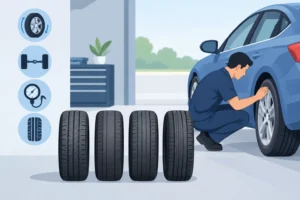
The most reliable way to prevent uneven tyre wear is consistency. A quick visual check at a service interval is valuable, but measuring tread and pressures at regular intervals is more effective. For private vehicles, a monthly pressure check is a sensible baseline. Fleet and commercial users may need more frequent inspections based on load, mileage and operating routes.
Pressures should be checked when tyres are cold, ideally before the vehicle has travelled far. Use a reliable gauge and inspect all four tyres, plus the spare where fitted. Do not forget that front and rear pressures are often different.
Tread depth should be measured across the inner, centre and outer areas of each tyre. This reveals developing wear patterns that a centre-only measurement can miss. The legal minimum tread depth in the UK is 1.6 mm across the central three-quarters of the tread, around the full circumference, but replacement before reaching that limit provides a better safety margin in wet conditions.
Record the readings for fleet vehicles and regular workshop customers. A simple history makes it easier to identify whether a problem is progressing on one wheel, across an axle or after a particular repair. It also supports clearer recommendations, because the customer can see the evidence behind the work advised.
Maintain the Components That Protect Tyre Life
Tyres cannot wear evenly if the systems around them are not functioning correctly. Wheel alignment, suspension and steering should be assessed as connected systems rather than separate jobs.
After replacing control arms, track-rod ends, suspension bushes, springs, struts or steering components, wheel alignment should normally be checked. The same applies after a significant pothole impact or kerb strike. Even if there is no obvious pull at the steering wheel, a small toe error can remove substantial tread over time.
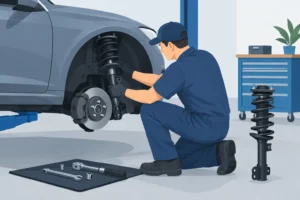
Shock absorbers deserve particular attention. Their role is not limited to ride comfort. Effective dampers help tyres maintain stable contact with the road. When damping performance deteriorates, the wheel can rebound excessively, producing irregular wear and reducing control over rough surfaces. Replacement should be carried out in axle pairs where appropriate, using quality components matched to the application.
Wheels also need inspection. A bent rim can create vibration, air loss or balance issues, while corrosion around the bead seat may allow slow leakage. Correct wheel nut torque matters as well. Uneven or excessive tightening can damage components and complicate later servicing.
Use Rotation Carefully, Not Automatically
Tyre rotation can help equalise wear, but it is not suitable in every case. On many front-wheel-drive cars, the front tyres wear faster due to steering, braking and driving forces, so moving tyres between axles at the recommended interval can extend overall set life.
The correct rotation pattern depends on tyre type, drivetrain and manufacturer guidance. Directional tyres must remain on the same side of the vehicle unless they are remounted. Tyres with asymmetric tread patterns can move between axles, provided their inside and outside markings remain correctly fitted. Staggered wheel-and-tyre sizes generally cannot be rotated front to rear.
Rotation should never be used to disguise a fault. If one tyre is wearing abnormally, inspect the vehicle first. Moving that tyre simply transfers the symptom and may make diagnosis less clear.
Match Tyres and Loads to the Vehicle’s Work
A vehicle that regularly carries tools, stock, passengers or towing loads needs tyre pressures and load ratings suited to that use. Running a heavily loaded van at unladen pressures can overwork the tyre shoulders and generate heat. Conversely, pressures set too high for a lightly loaded vehicle may lead to centre wear and reduced ride quality.
Mixed tyres across an axle can also create inconsistent handling and wear characteristics. Where replacement is required, fit tyres of the correct size, load index and speed rating, and follow manufacturer guidance on placement. For fleets and workshops, standardising on reliable tyre specifications helps simplify maintenance decisions and keeps service quality consistent.
Driving conditions matter too. Repeated short journeys, rough industrial access roads, poor road surfaces and frequent kerb contact all accelerate wear. Drivers should be encouraged to report vibrations, steering pull and pressure warnings promptly. Early reporting is cheaper than waiting for a tyre to become visibly damaged.
Support Better Repairs With the Right Replacement Parts
When uneven wear reveals a worn steering or suspension component, part quality directly affects the durability of the repair. Poor fitment, inadequate materials or incorrect specification can compromise alignment stability and bring the customer back sooner than expected.
For trade customers, dependable stock access is equally important. A repair cannot be completed efficiently if compatible shock absorbers, steering parts, bushes or service items are difficult to source. Multi Top supports workshops and parts dealers with a broad range of quality replacement components designed to keep vehicles operating reliably and repairs moving without unnecessary delay.
The best time to act is when the first uneven band of wear appears, not when the tyre reaches its legal limit. Check pressures accurately, measure tread across its full width, inspect steering and suspension condition, and correct wheel geometry after relevant repairs or impacts. Those small, disciplined checks protect tyre investment, support safer driving and give every vehicle a stronger foundation for the miles ahead.