A vehicle that pulls sharply under braking, returns with one wheel unusually hot, or seems reluctant to coast has a fault that should not wait for the next service. Understanding why calipers seize helps workshops make the right repair first time, while fleet operators and vehicle owners can prevent a minor brake issue becoming a costly recovery, damaged disc or avoidable downtime.
A brake caliper is designed to apply controlled pressure to the pads, then release cleanly as soon as the pedal is released. When part of that movement is restricted, one pad may remain in contact with the disc. The resulting drag creates heat, rapid wear and inconsistent braking. The cause is not always the caliper body itself, so accurate inspection matters before parts are ordered.
Why calipers seize: the main mechanical causes
Most seized-caliper complaints fall into one of two groups: a piston that cannot retract correctly, or pads and slider pins that cannot move freely in the carrier. Both can produce similar symptoms, but they require different repairs.
Corrosion around the piston and seal
The piston sits behind a rubber dust boot and hydraulic seal. If the boot splits, hardens or becomes dislodged, water, road salt and debris can reach the piston surface. Corrosion then forms where smooth movement is essential. As the piston is forced out during braking, rough areas can bind against the seal and prevent it from returning as intended.
This is especially common on vehicles exposed to winter road treatment, coastal conditions or long periods of standing. A caliper may appear acceptable during a visual check, yet begin dragging once it has been heated during normal use. On older vehicles, corrosion inside the caliper bore can cause the same problem.
Seized guide pins and restricted sliding movement
Floating calipers rely on guide pins to centre the caliper over the disc. When the pins are dry, corroded, bent or fitted with damaged rubber sleeves, the caliper cannot slide freely. One pad may apply most of the braking force while the other remains partly engaged or wears far more quickly.
This fault is often missed because the piston still moves when tested. A technician should remove the pins, inspect their surfaces and confirm that they travel smoothly in the correct bores. Some caliper designs use different pin types or damping sleeves in specific positions. Mixing them up can cause noise, poor movement or premature wear.
Pads binding in the carrier
Brake pads must move freely within their retaining points. Rust can build up under the stainless-steel abutment clips or on the carrier itself, reducing the clearance around the pad ears. The pads then stick in position rather than retracting from the disc.
This is a common source of repeat brake work where pads are replaced without properly cleaning and preparing the carrier. Fitting new pads into a corroded carrier may restore braking temporarily, but the restricted movement remains. The correct approach is to clean the contact areas carefully, replace damaged clips and ensure the pads slide without force before assembly.
Hydraulic pressure trapped in the circuit
Not every dragging brake is caused by a mechanically seized caliper. A collapsed flexible brake hose can act like a one-way valve, allowing fluid pressure to reach the caliper but restricting its return when the pedal is released. Less commonly, contamination, incorrect adjustment or a master-cylinder fault can retain pressure in the hydraulic system.
A useful diagnostic distinction is what happens when the bleed screw is opened safely and correctly. If the caliper releases as pressure escapes, the restriction may be upstream in the hose or hydraulic circuit. If it remains tight, the problem is more likely within the caliper, pad carrier or slider mechanism. This check should be performed by trained personnel because brake fluid handling and bleeding procedures directly affect vehicle safety.
The warning signs of a sticking brake caliper
A seized or sticking caliper rarely improves on its own. The earliest symptom may be a vehicle that pulls to one side under braking, although road camber, tyre condition and suspension faults can create similar behaviour. A more reliable pattern is one wheel becoming noticeably hotter than the others after a short journey.
Drivers may also report a burning smell, reduced fuel economy, a steering vibration, poor acceleration or a vehicle that does not roll freely after stopping. In more severe cases, the wheel may feel hot enough to radiate heat, the disc may show blue discolouration and brake smoke may be visible. The vehicle should be stopped and allowed to cool in a safe location. Continuing to drive risks boiling the brake fluid, damaging the wheel bearing and seriously reducing braking performance.
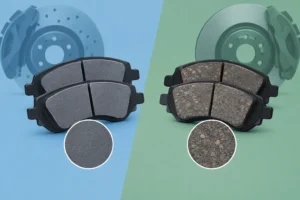
For workshops, uneven pad wear is a valuable clue. An inner pad worn much more heavily than the outer pad commonly points to a piston issue. A large difference between pads on the same caliper can also indicate slider-pin or carrier binding. Disc condition matters too: heat spots, cracking, heavy scoring or excessive run-out may mean the disc has been compromised and should not be reused.
Diagnose the complete brake assembly before replacing parts
Replacing a caliper can be the right repair, but it should follow a complete assessment rather than an assumption. Start with a road test where safe, then compare wheel temperatures and inspect both sides of the axle. Raise the vehicle correctly, check for free wheel rotation and examine the pads, discs, carrier, clips, slider pins, dust boots and flexible hose.
The piston should retract with the correct tool and controlled pressure. Some rear calipers incorporate a parking-brake mechanism and must be wound back rather than simply pressed in. Forcing the wrong type can damage the caliper. Inspect the condition of the brake fluid as well. Old fluid absorbs moisture, which promotes internal corrosion and lowers its boiling point.
Where one caliper has failed through age or corrosion, inspect the opposite side closely. It may not always be necessary to replace calipers in pairs, provided the other unit is demonstrably serviceable. However, brake pads and discs should normally be replaced axle by axle where wear, overheating or contamination affects their performance. The decision depends on measured condition, manufacturer requirements and the vehicle’s operating demands.
Repair choices that protect safety and operating cost
A minor slider or pad-binding issue may be resolved through thorough cleaning, new fitting hardware and the correct high-temperature brake lubricant applied only to approved contact points. Lubricant must never reach pad friction material or disc surfaces.
A caliper with a torn boot, corroded piston, damaged bore or persistent hydraulic binding usually calls for replacement or professional reconditioning. Attempting to free a heavily corroded caliper without addressing the root cause can create a short-lived repair and expose the customer to repeat failure. A quality replacement caliper, matched precisely to the vehicle specification, provides a more dependable outcome where the existing unit is beyond service limits.
The repair should also account for related components. Overheated pads can glaze and lose friction consistency. Heat-checked or blue discs may have reduced integrity. A restricted hose can cause a replacement caliper to drag again. For trade customers, this is where parts availability and accurate fitment support directly protect workshop efficiency: the job is completed once, with the correct compatible components on hand.
After any hydraulic brake repair, bleed the system using the vehicle manufacturer’s procedure, check for leaks, confirm pedal feel and carry out a controlled road test. If electronic parking brake functions or brake wear sensors are fitted, follow the correct service mode and reset process.
Preventing caliper seizure in regular service
Prevention is less expensive than replacing heat-damaged brake components. During routine brake inspections, do not assess pad thickness alone. Check that pads move freely, slider boots are intact, pins are lubricated appropriately and dust boots protect the pistons. This is particularly worthwhile before winter and after periods of reduced vehicle use.
Fleet vehicles, delivery vans and cars used for frequent short journeys deserve closer attention. Their brakes may experience repeated heat cycles without enough sustained driving to clear surface corrosion from discs. Vehicles that sit unused can develop pad-to-disc corrosion and stiff slider movement even when mileage is low.
Using dependable replacement parts and correct installation materials also makes a measurable difference. Multi Top supports workshops, dealers and vehicle owners with quality service components selected for reliable fitment, braking performance and long-term value. For any brake concern, matching the part to the precise vehicle application is as important as selecting a reputable component.
A dragging brake is a safety issue first and a maintenance issue second. Acting when the first signs appear protects discs, pads, tyres and bearings, but more importantly, it preserves the consistent, predictable stopping performance every vehicle needs.