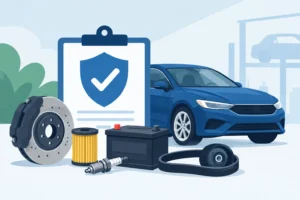
A replacement part can look correct, fit correctly and still create a costly problem if its warranty terms are unclear. For workshops, dealers, fleet operators and vehicle owners, a guide to automotive parts warranties is not simply paperwork guidance. It is a practical way to protect repair quality, control comeback costs and make better purchasing decisions.
A warranty should support confidence in the part, but it does not mean every failure or related repair will automatically be covered. The real value lies in understanding what is covered, how long cover lasts, what conditions apply and what evidence is needed if a claim is necessary.
What an automotive parts warranty actually covers
An automotive parts warranty is a supplier or manufacturer commitment that a part will be free from defects in materials or workmanship for a stated period, or sometimes for a specified mileage. If the part fails because of a verified manufacturing defect within those terms, the warranty may provide a replacement part, credit or refund.
The wording matters. A warranty normally covers the component itself, not every consequence of its failure. For example, a defective water pump may be eligible for replacement, while associated labour, coolant loss, recovery charges or engine damage may be excluded unless the warranty expressly says otherwise.
This distinction is especially important for trade customers. A workshop may have already invested time diagnosing the issue, removing the failed component and refitting a replacement. Knowing the supplier’s policy before sale helps set clear expectations with the end customer and reduces avoidable disputes.
A warranty also sits alongside any statutory consumer rights that apply in the relevant jurisdiction. It should not be treated as a replacement for those rights. For business-to-business purchases, however, contractual warranty terms often carry greater weight, making accurate records and approved processes essential.
Guide to automotive parts warranties: the terms to check
Do not judge warranty value by duration alone. A longer term can be useful, but only when the conditions are transparent and appropriate for the component’s intended use. Before fitting or selling a replacement part, review the coverage in practical terms.
First, confirm the start date. Some warranties begin on the invoice date, while others begin when the part is fitted. This can make a material difference where dealers hold stock or workshops purchase parts before a booked repair.
Next, establish whether the warranty has a time limit, mileage limit or both. A shock absorber, clutch kit or timing belt may have different considerations from an air filter or wiper blade. Wear items commonly have more limited cover because service life is directly affected by driving conditions, vehicle use and maintenance.
Then check the remedy. The supplier may replace the part, issue a credit or refund the purchase price. Labour reimbursement is less common and should never be assumed. Where a vehicle is used for commercial transport, taxi work, delivery services or fleet operations, confirm whether the standard warranty applies to that duty cycle.
Finally, identify any exclusions. Clear exclusions are not a sign of poor quality. They define the boundary between a product defect and a problem caused by fitment, vehicle condition or normal use.
Why correct fitment is central to warranty protection
Many rejected warranty claims do not arise because the part itself is poor. They arise because the underlying cause of failure was not addressed, the wrong specification was selected or installation requirements were not followed.
Consider a fuel pump that fails shortly after fitment. The pump may be functioning within specification, but contaminated fuel, a blocked strainer, damaged wiring or low system voltage can create symptoms that look like pump failure. Replacing the pump without diagnosing the source can lead to a repeat repair and an unsuccessful claim.
The same principle applies across common replacement categories. A radiator can be damaged by incorrect coolant concentration or excessive system pressure. A clutch kit can suffer premature wear because of oil contamination, a worn dual-mass flywheel or incorrect release system adjustment. A timing belt system can fail if related tensioners, pulleys or water pumps are not inspected or replaced according to the vehicle manufacturer’s procedure.
For workshops, the strongest protection is a disciplined installation process: confirm vehicle identification and engine code, check technical specifications, inspect connected components and retain evidence of the work completed. For dealers, offering the correct ancillary parts alongside the main component can improve repair outcomes and protect the reputation of the sale.
Common exclusions that deserve close attention
Warranty exclusions vary by brand, category and supplier policy, but several are consistently relevant. Normal wear and tear is often excluded, particularly for filters, wiper systems, friction materials and components exposed to routine service intervals.
Damage caused by accident, misuse, modification, racing, overloading or environmental exposure may also fall outside cover. Electrical parts frequently require proof that charging voltage, earth connections and associated wiring were tested before replacement. With lighting, mirrors and body parts, impact damage and fitting damage are usually treated separately from manufacturing defects.
Consumables and service items need particular care. An oil filter may be covered for a manufacturing fault, but not for damage caused by missed oil changes, incorrect lubricant or a blocked lubrication system. A warranty should therefore be viewed as quality assurance, not as a substitute for scheduled maintenance.
It is also common for warranties to exclude consequential loss. That can include vehicle downtime, lost earnings, hire vehicle charges and damage to other parts. Commercial buyers should factor this into their own customer terms, especially where a vehicle is business-critical.
Building a claim-ready record from day one
A well-managed claim starts before the part is fitted. The fastest route to a fair decision is a clear, traceable record that enables the supplier to assess the failure properly.
Keep the purchase invoice, part number, batch information where available, vehicle registration or VIN, mileage at fitment and mileage at the point of failure. Record the fitting date and retain workshop job cards. Photographs of the failed part, packaging and any connected damage can be valuable, particularly where a visual fault is present.
For technical components, diagnostic information matters. Save fault codes, pressure readings, charging-system results, alignment reports or cooling-system test results where relevant. This information does more than support a claim. It can reveal whether the issue is actually caused by another vehicle fault, preventing an unnecessary replacement.
Do not dispose of the part before receiving instructions. Suppliers may need to inspect it, test it or return it to the manufacturer. A part that has been dismantled, altered or discarded may be difficult to assess fairly.
How workshops and dealers can reduce warranty exposure
Warranty management is part of operational efficiency. A dependable supplier, accurate catalogue data and consistent fitting standards reduce the time spent handling returns and protect customer trust.
Workshops should communicate the warranty position at the point of quotation. Explain whether the quoted repair includes parts only, parts and labour, or additional cover offered by the business. Simple, upfront language prevents a customer from assuming that every future repair cost is included.
Dealers should verify applications before dispatch and avoid treating similar-looking parts as interchangeable. Vehicle make, model and year are useful starting points, but engine code, chassis number, braking system and electrical specification can be equally important. The correct part is the first step towards a valid warranty and a durable repair.
Supplier choice also matters. A distributor with broad category coverage can help trade customers source related components from one reliable partner, improving compatibility and reducing delays. With more than 30 years of aftermarket experience, Multi Top supports customers with dependable replacement parts and practical guidance when correct selection is critical.
When a warranty claim is the right next step
A claim is appropriate when there is reasonable evidence that a component has failed due to a defect in material or manufacture within the stated warranty period. Begin by checking the original terms, confirming fitment and ruling out external causes. Then contact the supplier promptly with the invoice and supporting evidence.
Avoid promising a customer an immediate replacement before the assessment route is clear. In urgent cases, a workshop may choose to fit another part to keep the vehicle mobile, but the commercial decision should be separate from the warranty assessment. This is particularly relevant for fleets, where downtime has a direct operating cost.
A reliable warranty process is not designed to create friction. It protects the supplier, the workshop and the vehicle owner by ensuring that genuine defects are handled consistently while installation issues and vehicle faults are identified accurately.
The best warranty outcome is often the claim that never needs to be made. Choose parts from a trusted source, match them precisely to the vehicle, fit them to specification and keep the evidence. That approach protects repair quality long after the invoice has been issued.