A customer is waiting at the counter, a vehicle occupies a workshop bay, and the required part must be identified correctly the first time. In that moment, parts catalogue automation is not simply an administrative improvement. It is the difference between a confident sale and a delayed repair, between protecting margin and absorbing the cost of a return.
For dealers, workshops and fleet support buyers, catalogue accuracy directly affects daily throughput. A poorly maintained catalogue creates duplicate listings, unclear applications, outdated supersessions and stock enquiries that take too long to resolve. Automation brings order to this process by connecting product data, fitment information, availability and pricing in a controlled system.
What parts catalogue automation should achieve
Parts catalogue automation uses defined rules and connected data to create, update and present product information with less manual intervention. In an aftermarket environment, this may include assigning products to vehicle applications, applying technical attributes, managing part-number cross-references, updating stock positions and publishing approved product details to sales channels.
The purpose is not to remove experienced people from the process. Product knowledge remains essential, particularly where vehicle variants, engine codes or regional specifications affect fitment. The objective is to give sales teams and customers reliable information faster, while allowing experienced staff to focus on exceptions, technical advice and stronger customer relationships.
A well-managed system should make it easier to answer practical questions: Does this timing belt suit this engine? Is the correct radiator available now? Has this fuel pump been superseded? What is the dealer price, and what is the lead time if stock is not held locally?
When these answers are consistent across the counter, telephone orders and online channels, businesses spend less time correcting avoidable mistakes.
Parts catalogue automation starts with disciplined data
Automation can only improve information that is structured properly. If source records are incomplete or inconsistent, the system may distribute errors more quickly. Before automating a catalogue, distributors should establish a clear product-data standard for every category.
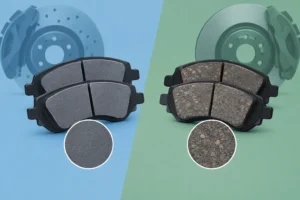
For a brake component, that may include axle position, disc diameter, thickness, pad shape and vehicle application. For lighting, it may include left- or right-hand position, lamp type, connector details and adjustment compatibility. A listing that says only “headlamp for saloon” creates uncertainty. A listing with confirmed fitment and technical characteristics supports a faster purchasing decision.
Standardise part numbers and descriptions
Each item needs a dependable internal reference, manufacturer number where applicable, brand, category and clear description. Normalised descriptions matter because different staff members may otherwise record the same component in several ways. For example, “front shock”, “front absorber” and “F shock absorber” may describe the same item but complicate searching, reporting and stock control.
Automation rules can then flag incomplete records, prevent duplicate entries and apply a consistent format across thousands of products. This is particularly valuable for broad portfolios covering engine parts, body parts and routine service items.
Build fitment around evidence, not assumptions
Vehicle registration lookup can speed up identification, but it should not be treated as the final authority for every application. Model year, engine size and trim level alone may not distinguish between all variants. VIN data, OE references, engine codes and physical specifications may still be required.
A dependable catalogue records the confidence of its fitment data and makes exceptions visible. This protects both the distributor and the workshop. A quick answer is useful only when it is correct.
Connect availability and commercial rules
Customers need more than compatibility information. They need to know whether a part is available, whether an approved alternative exists and what price applies to their account. Catalogue automation can draw current stock data and agreed trade pricing into the sales process, reducing the need for repeated manual checks.
This connection must be carefully governed. Stock figures should reflect realistic availability, including reserved quantities and incoming purchase orders where relevant. Pricing rules should also protect agreed dealer terms without exposing confidential commercial conditions to the wrong user.
Where the operational value becomes visible
The commercial benefit of automation is often measured in speed, but the larger gain is control. Counter staff can search by part number, OE reference, vehicle details or product attributes without relying on memory or separate spreadsheets. Workshops can order with greater confidence, and purchasing teams can identify slow-moving duplicates or gaps in high-demand ranges.
Fewer returns can improve profitability quickly. Returned parts create transport costs, handling time, potential packaging damage and customer frustration. In some cases, the component cannot be resold as new. Better fitment guidance does not eliminate every return, but it reduces the returns caused by incorrect identification.
Automation also improves continuity when experienced employees are unavailable. Trade businesses rightly value knowledgeable staff, yet a catalogue should not depend entirely on one person knowing every application or supersession. Structured information gives the wider team a dependable foundation, while expert judgement remains available for more complex enquiries.
For fleet operators and busy independent workshops, this consistency can help reduce vehicle downtime. Faster identification of service parts, clutch kits, cooling components or wiper systems means repair decisions are less likely to be held up by basic catalogue uncertainty.
The trade-offs that need managing
Catalogue automation is not a switch that can be turned on and forgotten. It requires investment in data cleansing, system integration, product governance and staff training. The more product categories, brands and vehicle applications a distributor carries, the more care is needed at the beginning.
There is also a risk in over-automating customer communication. A system may suggest an alternative item based on category or basic dimensions, but a trained adviser should review safety-critical, technical or unusual applications. Steering, braking, engine timing and electrical components deserve particularly careful validation.
Smaller businesses do not always need a large enterprise platform. A focused solution that improves search, part-number control and stock visibility may deliver stronger value than an expensive system with functions nobody uses. The right approach depends on catalogue size, order volume, customer channels and the quality of existing data.
A practical route to implementation
Begin with the product groups that create the most enquiries, returns or manual work. Fast-moving service parts are often a sensible starting point because they have clear applications and high transaction frequency. Engine and body parts can follow once standards and workflows are proven.
Set measurable targets before the project begins. These might include reducing time spent locating a part, lowering incorrect-order returns, increasing the proportion of listings with verified fitment or shortening the time needed to add a new range. Without these measures, it is difficult to judge whether the investment is delivering commercial value.
Data ownership should be clear. Someone must be accountable for approving new product records, managing supersessions, reviewing exceptions and correcting errors reported by customers or staff. Automation makes updates faster, but governance keeps them trustworthy.
Training should focus on real counter and workshop scenarios rather than software features alone. Staff need to understand how to search effectively, when to verify against an OE number or VIN, how to interpret stock status and how to report catalogue gaps. This turns the system into a practical sales and service tool rather than another screen to manage.
Choosing a catalogue partner with care
A catalogue is only as credible as the information and supply support behind it. Dealers and workshops should look for distributors that understand aftermarket fitment, maintain clear product references and can provide knowledgeable assistance when a vehicle presents an exception.
With more than 30 years of industry experience and a broad range across engine, body and service parts, Multi Top recognises that reliable product information supports reliable repairs. Catalogue technology should strengthen that relationship, not replace the expert guidance customers depend on.
The strongest results come when accurate data, current availability and human expertise work together. Start with the parts and processes causing the greatest daily friction, improve them methodically, and let every correct order build greater confidence in the next one.