A missed oil filter change may look minor on a job card, but its effects can reach far beyond the next service interval. Contaminated oil, poor filtration and delayed replacement can accelerate wear across expensive engine components. This vehicle maintenance parts guide is designed to help workshops, fleet operators, dealers and vehicle owners make practical decisions that protect safety, performance and operating costs.
The right maintenance part is not simply the one that fits. It must meet the vehicle’s specification, withstand its operating conditions and deliver dependable service between scheduled inspections. For trade customers, availability matters just as much. A reliable supply of proven parts keeps bays productive, reduces repeat repairs and helps customers return to the road with confidence.
Start With the Parts That Protect Daily Reliability
Maintenance should be organised around the systems most likely to affect vehicle safety, drivability and downtime. Service schedules provide the starting point, but mileage alone is not always enough. Stop-start traffic, heavy loads, short journeys, extreme temperatures and dusty conditions can all shorten component life.
Filters and fluids: small parts with major consequences
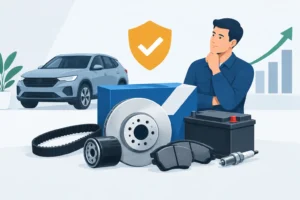
Oil filters, air filters and fuel filters are routine items, yet they play a direct role in engine protection. An oil filter captures contaminants that would otherwise circulate through the lubrication system. A restricted air filter can reduce airflow, affect fuel efficiency and contribute to poor engine response. A fuel filter helps protect injectors and fuel pumps from debris and water contamination.
Filter replacement should always be considered alongside the correct fluid or lubricant. Using an unsuitable oil grade or extending intervals beyond the manufacturer’s recommendation can undermine even the best replacement filter. For workshops, pairing filters with the relevant service consumables makes routine maintenance more efficient and gives customers a clearer, more complete repair recommendation.
Cooling system components deserve similar attention. Radiators, hoses, caps and water pumps work as a system, not as isolated items. Replacing a leaking radiator without checking coolant condition, hose integrity and thermostat operation may only postpone the next fault. Cooling failures can quickly lead to overheating, warped cylinder heads and lengthy vehicle downtime, particularly in hard-working fleet vehicles.
Belts, tensioners and timing components
Timing belts are among the most critical planned-replacement parts on many engines. If a timing belt fails, internal engine damage can be severe. Replacement must follow the vehicle manufacturer’s interval for time and mileage, with adjustments where operating conditions are demanding.
A timing belt job should not be treated as a belt-only repair. Tensioners, idler pulleys and, where applicable, the water pump may have comparable service lives. Replacing the complete set reduces the risk of a worn supporting component damaging a newly fitted belt. This approach costs more upfront than fitting one part alone, but it offers substantially better protection against repeat labour and unplanned engine repairs.
Vehicle Maintenance Parts Guide: Safety-Critical Checks
Some maintenance decisions are about preserving efficiency. Others are about preventing a dangerous loss of control or visibility. Braking, suspension, lighting and wiper systems should be inspected consistently, with replacement based on condition rather than guesswork.
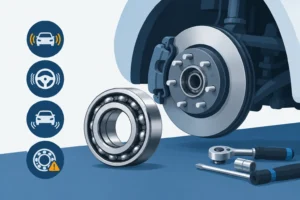
Brake pads and discs should be checked for wear, scoring, corrosion and uneven contact. A vehicle that pulls under braking, produces grinding noise or has a soft pedal needs prompt investigation. The cause may be worn friction material, but it could also involve seized calipers, contaminated brake fluid or damaged hoses. Quality replacement parts and correct installation are both essential, because brake performance depends on the complete system.
Shock absorbers affect more than ride comfort. Worn units can lengthen stopping distances, reduce tyre contact and make a vehicle less stable through corners or on uneven road surfaces. They should be assessed for leaks, physical damage, excessive bounce and uneven tyre wear. Where one shock absorber requires replacement, replacing the matching unit on the same axle is normally the sounder option for balanced handling.
Wiper blades and lighting components are often delayed until a driver notices a problem in poor weather or after dark. That is the wrong time to discover reduced visibility. Smearing blades, cracked rubber, dim lamps and damaged lenses should be addressed during routine inspections. These are straightforward replacements, but they make a material difference to safe everyday driving.
Match the Part to the Vehicle and the Job
Correct fitment is central to reliable maintenance. Two parts may appear similar but differ in dimensions, connector type, pressure rating, mounting position or electronic compatibility. Selecting by vehicle registration, VIN details, engine code and original part number where available helps avoid costly errors.
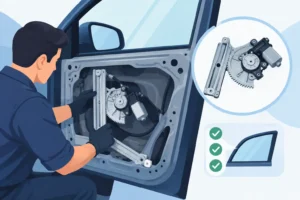
For dealers and workshops, accurate catalogue data should be supported by a practical fitment check before fitting. Confirm the vehicle variant, production year, transmission type and any relevant options. This is particularly important for fuel pumps, sensors, lighting assemblies, side mirrors and body parts, where changes can occur within the same model range.
Quality should be judged by more than price. The lowest-cost component can be appropriate for certain low-mileage or short-term applications, but it may not offer the durability expected by a fleet operator or customer who intends to retain the vehicle for years. Conversely, a premium specification part is not automatically necessary for every repair. The right choice depends on vehicle age, usage, repair budget and the customer’s expectations.
A dependable supplier should offer clear product information, consistent availability and support when a fitment question arises. Multi Top supports trade and retail customers with a broad range of replacement engine, service and body parts, helping reduce the time spent sourcing multiple categories from separate suppliers.
Build a Maintenance Plan Around Use, Not Just Mileage
A private car used mainly for longer motorway journeys may have different maintenance needs from a delivery van making repeated short stops. Fleet operators should track patterns across vehicles rather than relying only on standard intervals. Recurring brake wear, filter contamination or suspension repairs can point to a route, loading or driving-condition issue that needs attention.
A practical maintenance plan should cover four areas:
- Scheduled service parts, including filters, belts, spark plugs where applicable and essential fluids.
- Safety inspections for brakes, tyres, suspension, lighting and wiper performance.
- Condition-based checks for cooling components, batteries, hoses, fuel-system parts and clutch operation.
- Replacement planning for high-risk components before they cause roadside failure or disrupt workshop schedules.
Keeping accurate service records adds value to this process. It enables workshops to advise customers with confidence, allows fleets to forecast parts demand and provides a useful history when diagnosing repeat faults. It also supports better stock planning for fast-moving items such as oil filters, air filters, brake components and wiper systems.
Avoid False Economies in Parts Replacement
False economy often appears in two forms: delaying a part that is clearly near the end of its service life, or fitting a poor-quality replacement to save a small amount immediately. Both choices can increase total repair costs.
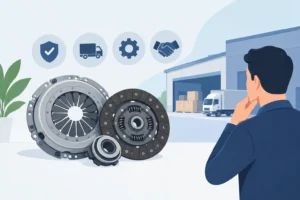
A worn clutch kit, for example, may initially show only slipping under load or a high bite point. Waiting until complete failure can leave a vehicle immobile and may add recovery costs to the repair. Similarly, fitting a low-grade fuel pump can create inconsistent pressure, poor starting and repeat diagnostic work. The cost of reopening a repair is usually far greater than selecting a reliable component at the outset.
That said, replacing every adjacent part without inspection is not good workshop practice either. The best recommendation is evidence-led: inspect the system, explain the risk, identify what is required now and distinguish it from preventative work that may be sensible while access is available. Clear advice protects the customer’s budget while reinforcing trust in the repair business.
Make Parts Availability Part of Maintenance Strategy
For a workshop or fleet, downtime is a commercial issue. A vehicle awaiting a common filter, radiator, mirror or lamp assembly can affect bookings, deliveries and customer satisfaction. Working with a distributor that carries a broad, dependable range helps reduce these delays and simplifies purchasing.
Stocking every possible part is rarely practical. Instead, dealers and workshops should hold fast-moving maintenance lines suited to their customer base, then rely on responsive supply for less common applications. Review sales and repair records regularly to identify which part numbers move consistently, which vehicles are most frequently serviced and where seasonal demand changes – such as wiper systems during wetter months – may affect stock needs.
Reliable vehicle maintenance is built through informed inspection, correct fitment and parts chosen for the work they must do. Treat every service item as part of a wider system, and each replacement becomes an opportunity to keep vehicles safer, workshops more productive and customers confident in the road ahead.