A fuel pump can be a small component with a large effect on workshop productivity. When it delivers the wrong pressure, loses prime or fails intermittently, the result may be hard starting, hesitation under load, poor fuel economy and an avoidable vehicle return. Understanding mechanical versus electric fuel pumps helps parts buyers and technicians specify the correct replacement first time, rather than treating all pumps as interchangeable.
The right choice is not simply a question of which design is newer. It depends on the vehicle’s fuel system, engine layout, required pressure, wiring arrangement and original-equipment specification. Fitting an electric pump where a mechanical unit belongs, or substituting a low-pressure pump for a high-pressure injection system, can create performance and safety issues.
How mechanical fuel pumps work
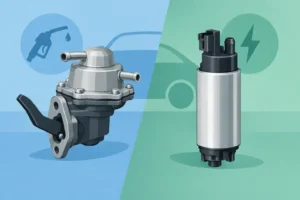
Mechanical fuel pumps are driven directly by the engine, usually through an eccentric camshaft lobe or an intermediate shaft. As the engine turns, a lever operates a diaphragm inside the pump. This movement draws fuel from the tank and sends it towards the carburettor or, on some older systems, the injection equipment.
Their defining advantage is simplicity. A conventional mechanical pump needs no separate motor, relay or electrical supply to move fuel. It operates only while the engine is cranking or running, and its output rises and falls with engine speed. For many classic vehicles, older commercial vehicles and carburetted engines, this is exactly what the system was designed to use.
Most mechanical pumps supply relatively low pressure. Carburettors generally require a controlled, modest fuel pressure; too much can overpower the needle valve and lead to flooding. The pump’s location on the engine also means replacement can be straightforward where access is clear, although a damaged mounting face, incorrect gasket thickness or poorly installed lever can quickly cause problems.
There are limitations. Because the pump pulls fuel over a longer distance from the tank, it can be more vulnerable to vapour lock in high under-bonnet temperatures. Its diaphragm, valves and operating lever are wear items. On older applications, a split diaphragm may allow fuel to enter the engine oil, so technicians should investigate an unexplained rise in oil level or a strong petrol smell in the sump.
How electric fuel pumps work
Electric fuel pumps use an electric motor to move fuel. They may be fitted inside the fuel tank, mounted externally along the fuel line, or supplied as part of a complete sender or module assembly. Modern petrol injection systems rely on electric pumps because injectors need consistent fuel volume and substantially higher pressure than a carburetted system.
An in-tank pump is cooled and lubricated by the fuel around it. It pushes fuel forwards rather than relying on engine vacuum or a mechanical lever to pull it from the tank. This arrangement supports stable delivery during acceleration, sustained motorway driving and high engine load, provided the pump, filter, wiring and pressure control components are all in sound condition.
Electric pumps also allow the vehicle to prime the fuel system before the engine starts. When the ignition is switched on, the control system may run the pump briefly to build pressure. On electronically managed engines, pump operation is typically controlled through relays, fuses and the engine management system, with safety logic designed to stop fuel delivery if the engine is not running.
That added capability brings added diagnostic considerations. A no-start fault may stem from the pump itself, but it can also be caused by a failed relay, corroded connector, damaged earth, restricted filter, low supply voltage or a control signal fault. Replacing the pump without checking pressure, current draw and electrical supply can leave the original fault unresolved.
Mechanical versus electric fuel pumps: the practical differences
The most significant difference is pressure and system compatibility. Mechanical pumps are commonly associated with low-pressure carburettor applications. Electric pumps cover a broader range, from low-pressure auxiliary units to high-pressure pumps for electronic fuel injection. Pressure figures alone are not enough, however. The replacement must also deliver the required flow rate at operating pressure.
Location is another clear distinction. A mechanical pump is normally engine-mounted and driven by engine movement. An electric pump may sit in the tank, near the tank or within a fuel delivery module. This changes both the fitting process and the likely causes of failure. Mechanical pump work may involve gaskets, mounting bolts and a pushrod or lever arrangement. Electric pump replacement may require careful tank access, clean handling of fuel connections and verification of the electrical circuit.
Reliability is best judged by application, installation quality and operating conditions rather than by design alone. A correctly specified mechanical pump can give long service on an older engine. A quality electric pump can provide dependable high-pressure delivery for many years, but it is less tolerant of contaminated fuel, a blocked filter or repeated operation with a very low fuel level. In-tank pumps rely on fuel for cooling, so regularly running near empty can shorten service life.
For stock control, the two categories demand different attention to fitment data. Mechanical pumps should be matched by mounting pattern, lever design, inlet and outlet orientation, engine code and operating pressure. Electric pumps require confirmation of pressure, flow, module design, connector type, terminal layout, fuel line connection, sender compatibility and, where applicable, the vehicle’s control strategy.
Choosing the right replacement pump
The strongest replacement decision starts with the vehicle specification, not the physical appearance of the old part. Pumps that look similar can differ in pressure, connector design, depth, fittings or internal regulation. For a dealer or workshop, recording registration details, VIN information, engine code and original part references reduces costly returns and installation delays.
Before ordering, establish whether the vehicle uses carburettor or fuel injection, and whether the pump is mechanical, in-tank electric or externally mounted electric. Confirm whether the supplied part is a pump only, a complete module, or an assembly including a sender, strainer and housing. A complete module may be the more dependable repair where multiple internal components have aged together, while a pump-only repair may suit the correct serviceable module and budget.
The surrounding fuel system deserves equal attention. Replacing a failed pump without addressing the cause can damage the new unit. A blocked fuel filter makes a pump work harder. Tank contamination can restrict the strainer and wear internal components. A poor electrical connection creates voltage drop, reducing pump speed and raising current demand. On mechanical systems, degraded fuel hoses, incorrect gaskets or a worn cam drive can imitate pump failure.
Where pressure testing is available, compare readings with the manufacturer’s specification under the relevant operating conditions. For electric pumps, check voltage at the pump under load rather than relying only on an unloaded battery reading. For mechanical pumps, inspect for external leakage, weak delivery, damaged diaphragm symptoms and correct installation of the operating mechanism. These checks help separate a fuel delivery fault from ignition, air intake or engine management issues.
Installation practices that protect the repair
Cleanliness matters at every stage. Dirt entering a tank or fuel line can compromise a new pump before the vehicle leaves the workshop. Cap open lines where practical, replace deteriorated seals and use fuel-rated hoses and clips of the correct specification. Never reuse seals or locking rings where the manufacturer requires replacement components.
For electric in-tank units, ensure the tank is adequately ventilated and follow appropriate fire safety procedures. Confirm that the pump module sits correctly, the sender arm moves freely and fuel lines are fully engaged. Once fitted, inspect for leaks, prime the system as specified and verify fuel pressure and engine operation.
For mechanical pumps, use the correct gasket and avoid excessive sealant, which can enter passages or alter mounting position. Tighten fasteners evenly to the required specification. After starting the engine, inspect the pump body, unions and hose connections for seepage before releasing the vehicle.
A quality replacement part is only as dependable as its fitment and the condition of the system around it. Multi Top supports trade customers and vehicle owners with a broad range of replacement components, helping reduce sourcing complexity when fuel delivery work also calls for filters, hoses or other service parts.
When the fault points to a fuel pump, the most commercial repair is rarely the quickest-looking option. Match the design to the vehicle, verify the supporting system and fit a component built for the required duty. That approach protects engine performance, keeps vehicles in service and gives customers confidence in the work long after the repair is complete.